Platform Requirements
Functional capabilities for a modern support engine
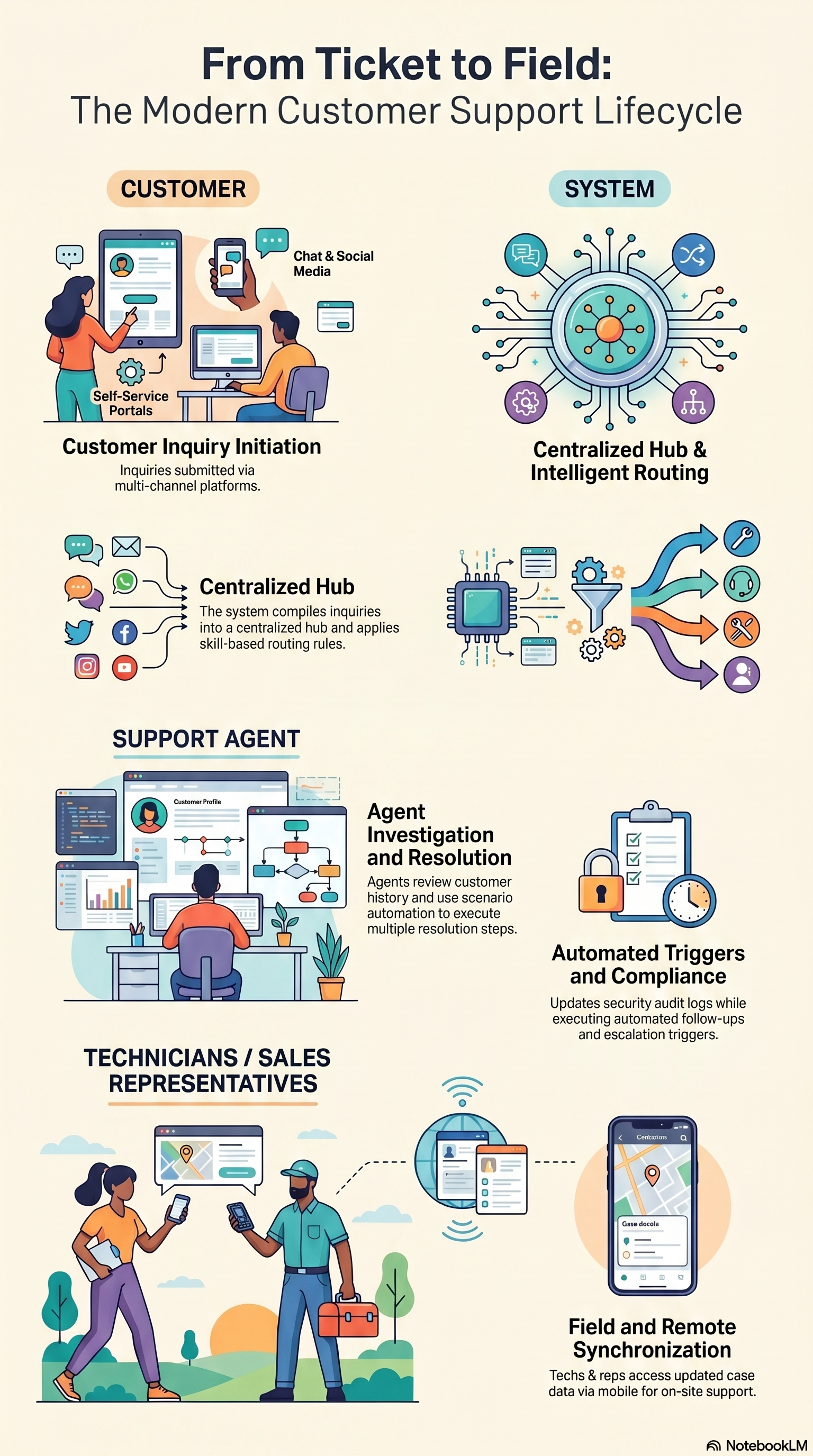
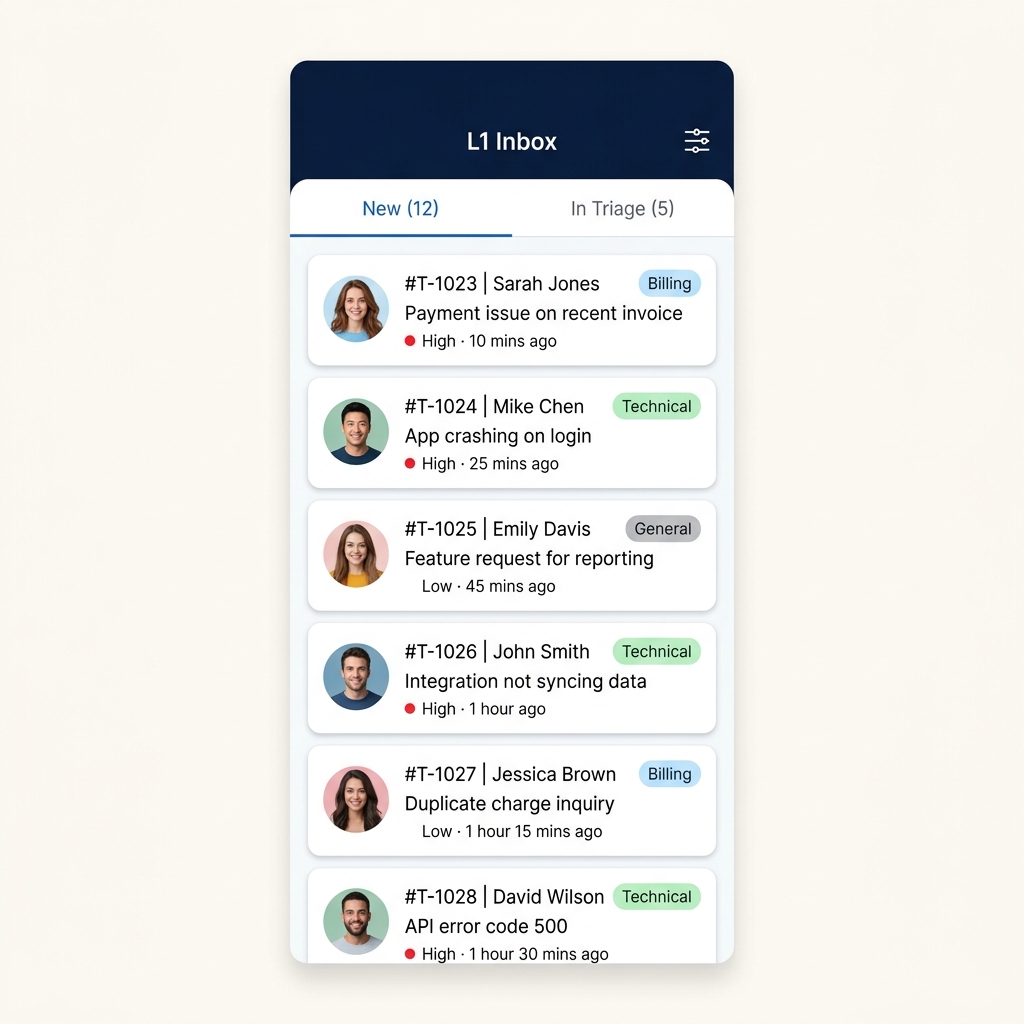
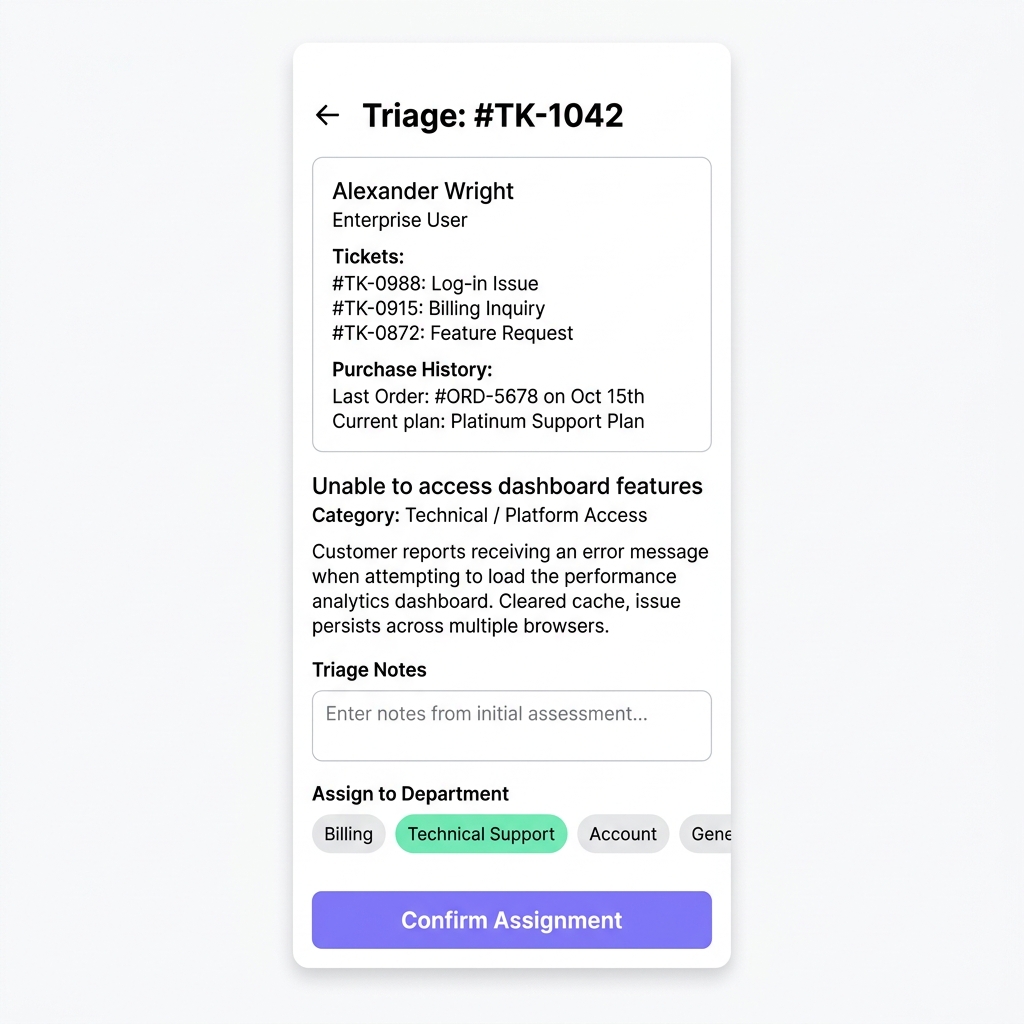
This functionality ensures that every customer request is automatically directed to the most appropriate agent based on predefined rules, caller priority, or specific agent skills. Intelligent routing saves time and prevents customers from feeling juggled between departments.
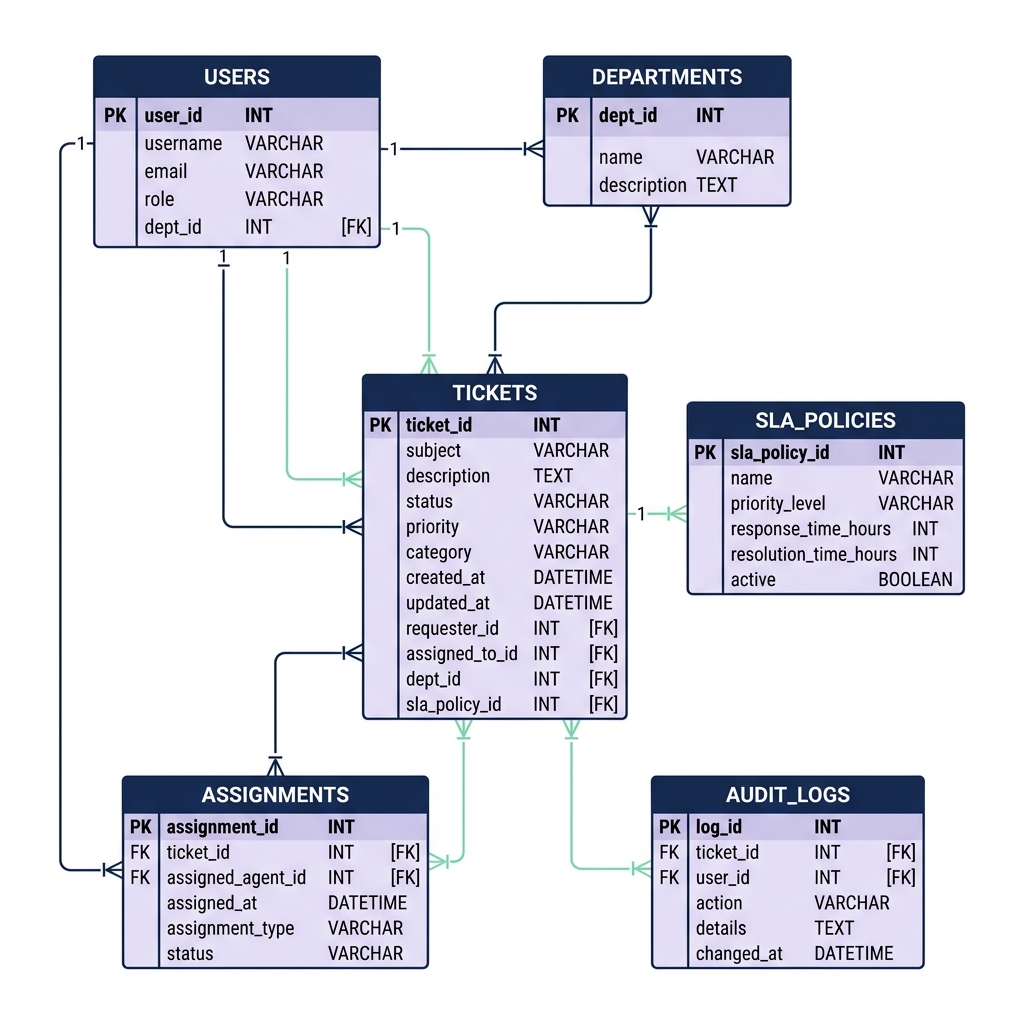
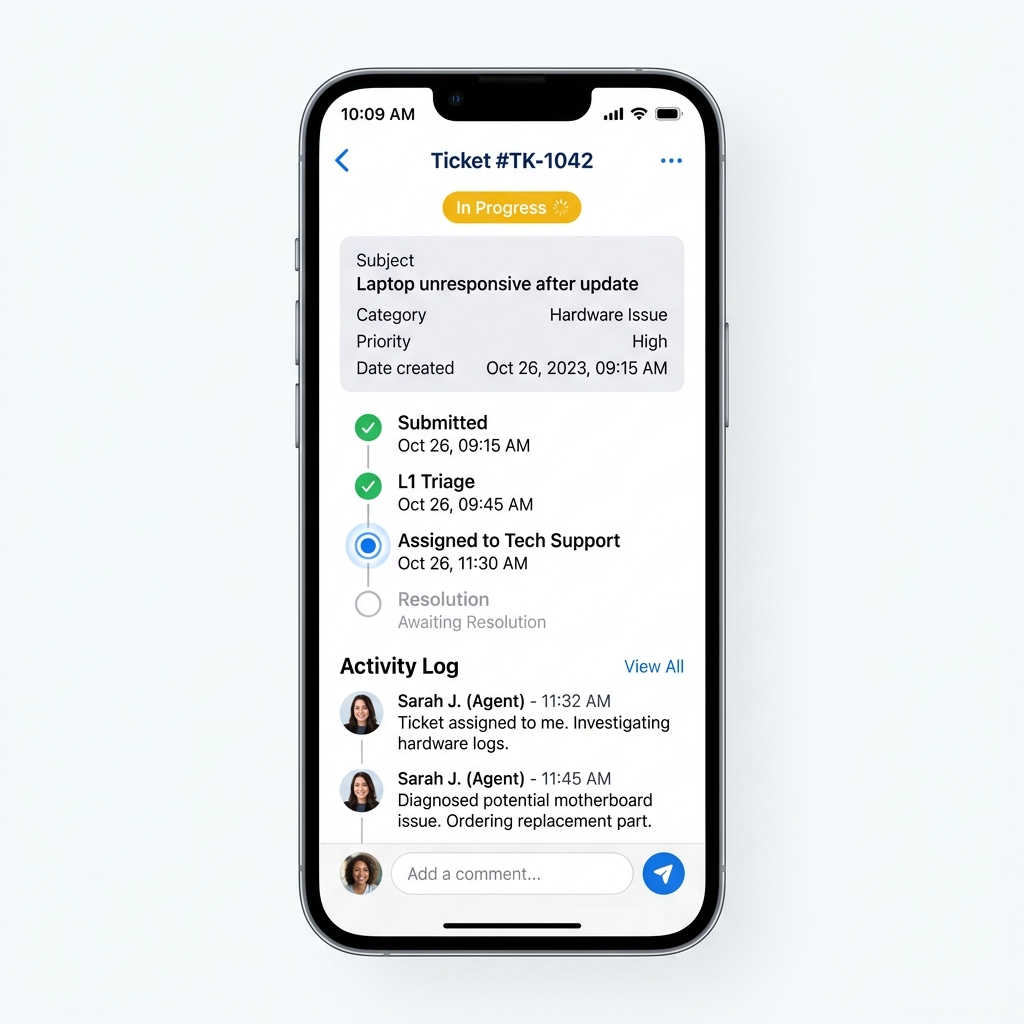
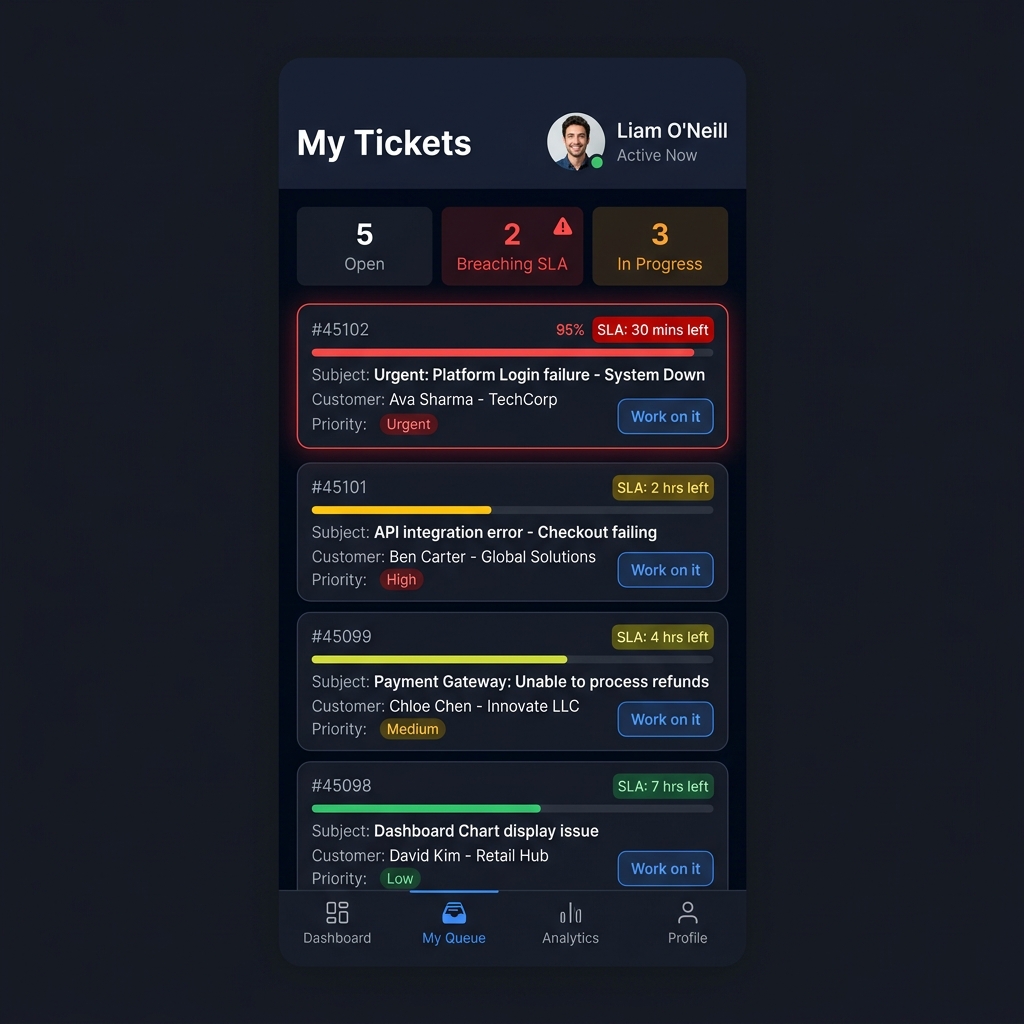
A centralized system is necessary to create, assign, manage, and route support cases from their initiation to final resolution. This transforms customer support from a basic shared inbox into a collaborative, highly visible operational hub.
Modern customer service requires gathering inquiries from a variety of channels—including telephone, email, live chat, discussion forums, social media, and SMS—and compiling them into a single, centralized interface for agents to manage.
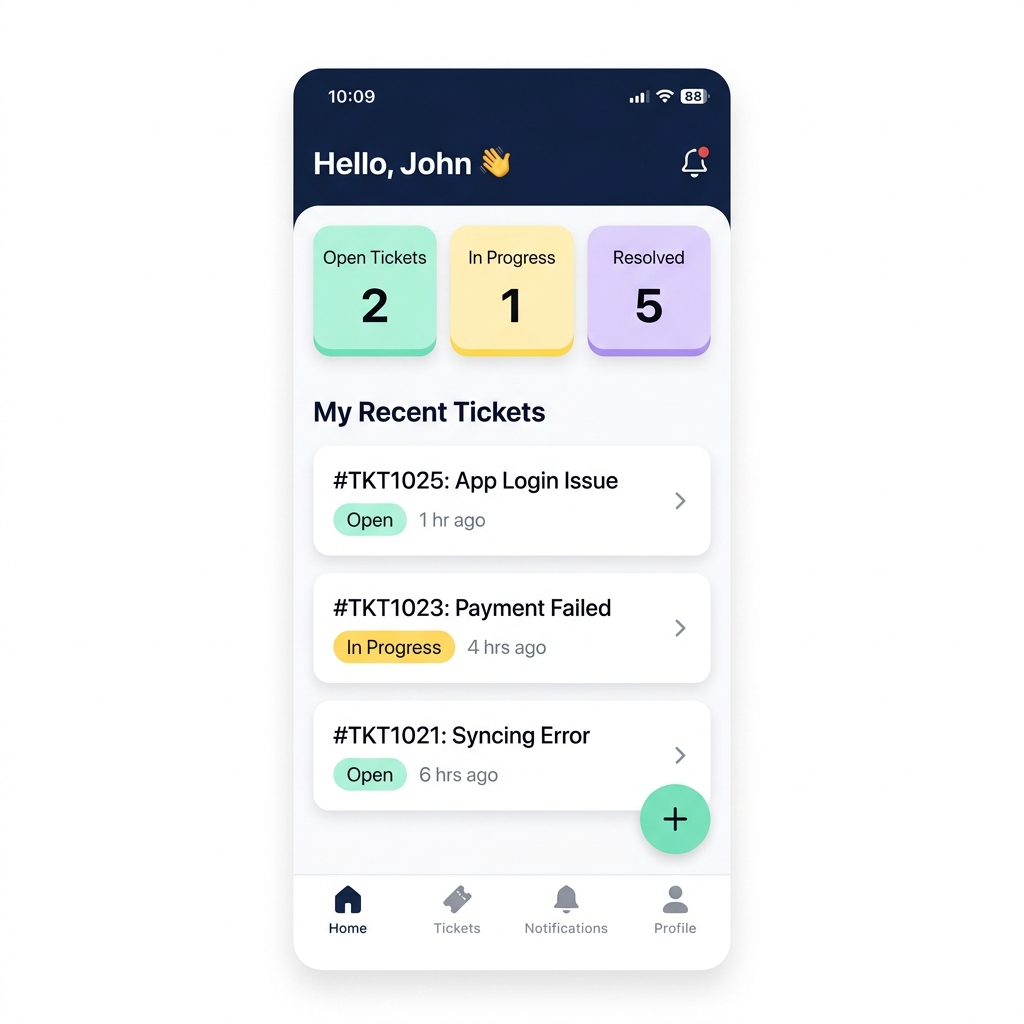
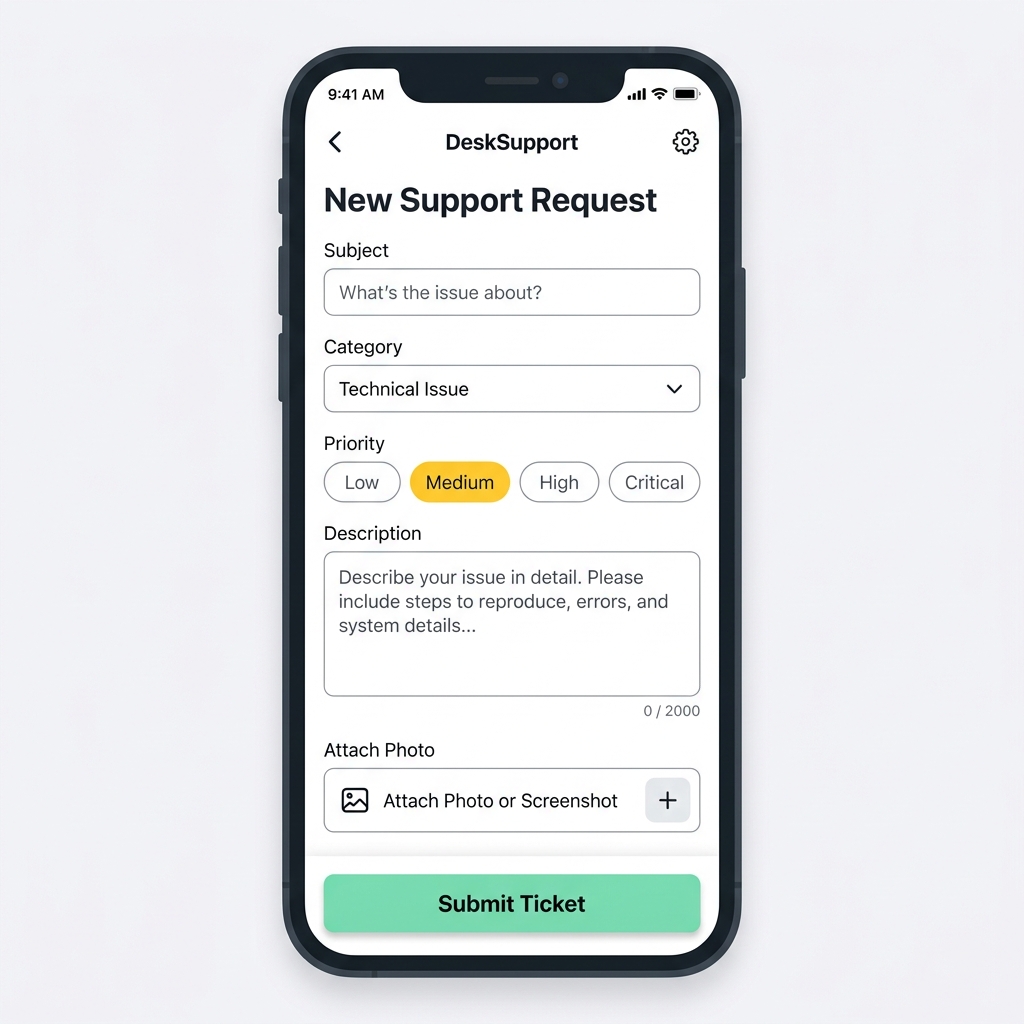
Applications must offer integrated portals that allow customers to independently create their own support tickets, track case statuses, modify account details, and search FAQs.
A robust system is required to organize, capture, and publish product and industry information. This empowers customers to find answers faster and provides agents with a reference library to avoid repetitive questions.
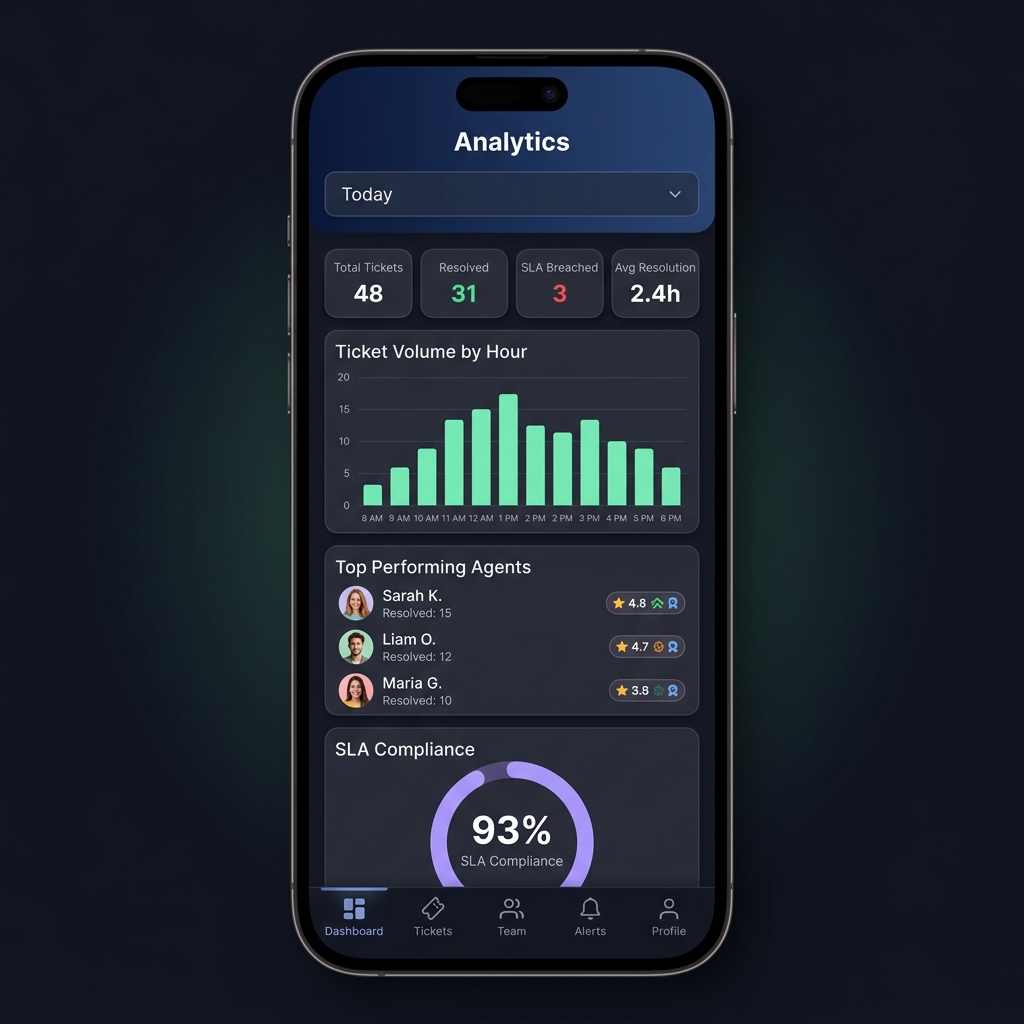
To continuously improve customer service, the application must include dashboards and reporting tools to track agent performance, communication volume, resolution times, and recurring customer concerns. These tools provide essential insights into the operational health of the support department.
The software must have features that automate repetitive and mundane tasks. This includes scenario automation that allows agents to execute multiple actions with a single click, as well as triggers that automatically schedule callbacks, send follow-up emails, or escalate unresolved tickets.
A customer support application needs to connect seamlessly with other business systems, such as ERPs, ecommerce modules, and inventory tools. API and plugin support ensures that agents have a comprehensive view of all customer interactions, billing, and purchase history.
Protecting sensitive customer information is critical for privacy and regulatory compliance. The application must feature data encryption, secure audit trails to track who accessed specific data, and role-based access controls to ensure employees only view the data they need.
The system must offer mobile support so that technicians and sales representatives can access up-to-date customer data while out of the office. Mobile capabilities ensure that support can be managed and delivered continuously from any location.